Twelve Miles in a Botanist’s Wake: The Legacy of Edwin Hunt
This botanical history post was featured on The Daily Gardener podcast:
June 17, 1869
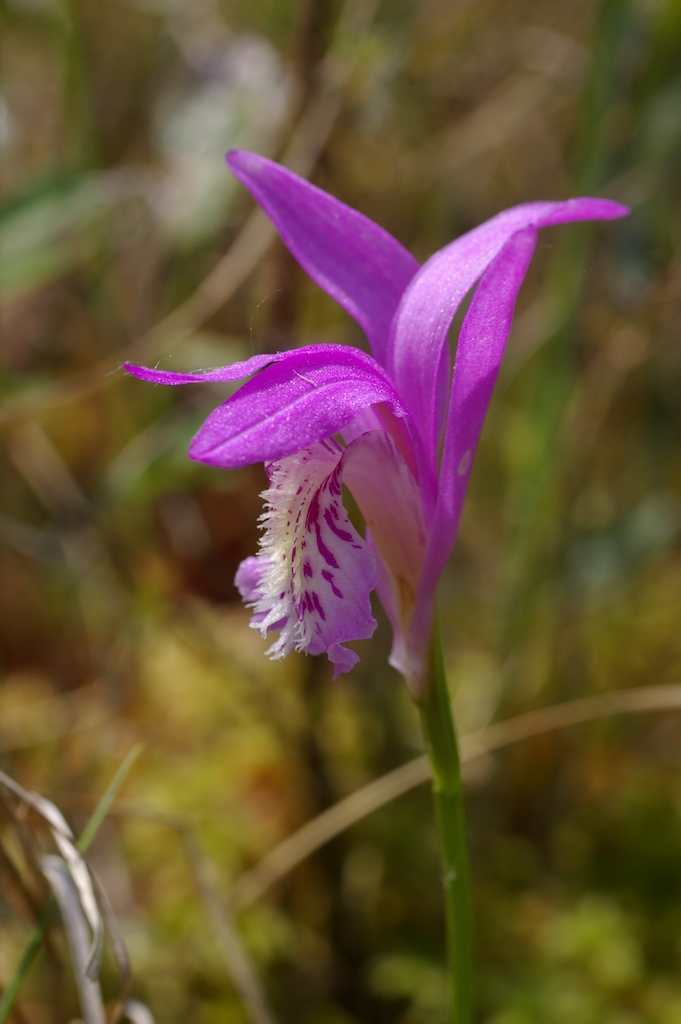
It was on this day in 1869 that the botanist Edwin Hunt, with the stealth of a fox and the determination of a particularly obstinate weed, collected the last known specimen of Arethusa bulbosa in the old Oriskany swamp in New York.
One imagines him creeping through the boggy terrain, his collecting case clutched to his chest like a lover's locket, his eyes darting about for any sign of botanical competition.
Arethusa bulbosa, known to the gardening cognoscenti as Dragon's Mouth Orchid, graces the eastern and central parts of the United States and Canada, from South Carolina to Saskatchewan. A treasure, to be sure, and one that Hunt guarded with the ferocity of a dragon himself.
One of Hunt's former students, perhaps still nursing blistered feet, shared his recollections of his exacting mentor:
"Mr. Hunt was an expert in the preparation of his botanical specimens.
Hunt was ever-guarded in his knowledge of the locality. He did not believe in sharing it if he thought someone would exhaust it.
He knew only too well how many years of patient industry he had spent on his collection."
Indeed!
A man after my own heart.
Why share the location of a prized specimen when every amateur with secateurs might descend upon it like locusts on a wheat field?
The poor student continued with this rather breathless account:
"We journeyed many miles together and he always seemed 2 inches taller when we got into the woods.
He was a very rapid walker and when on a botanical excursion, it was a difficult matter to keep up with him.
I have a faint but pleasant recollection of running at his heels for a distance of 12 miles."
Twelve miles at a botanist's heel!
One cannot help but wonder if Hunt's rapid pace was designed to lose unwanted followers or if the thrill of the botanical hunt simply propelled him forward with unnatural vigor. Perhaps both.
The true gardener knows that nothing quickens the pulse quite like the prospect of discovering a rare specimen.
The Crataegus huntiana now stands as a leafy memorial to Edwin Hunt's botanical fervor.
Fellow gardeners, let us take a moment to appreciate those who came before us, trampling through swamps and outpacing their students, all in service to botanical knowledge. Though perhaps we might consider a slightly more leisurely pace on our own expeditions, especially if we've brought companions.
One wonders what Hunt would make of our modern botanical databases and GPS coordinates.
Would he approve of such freely shared information, or would he guard his phone with the same jealousy he reserved for his secret orchid locations?