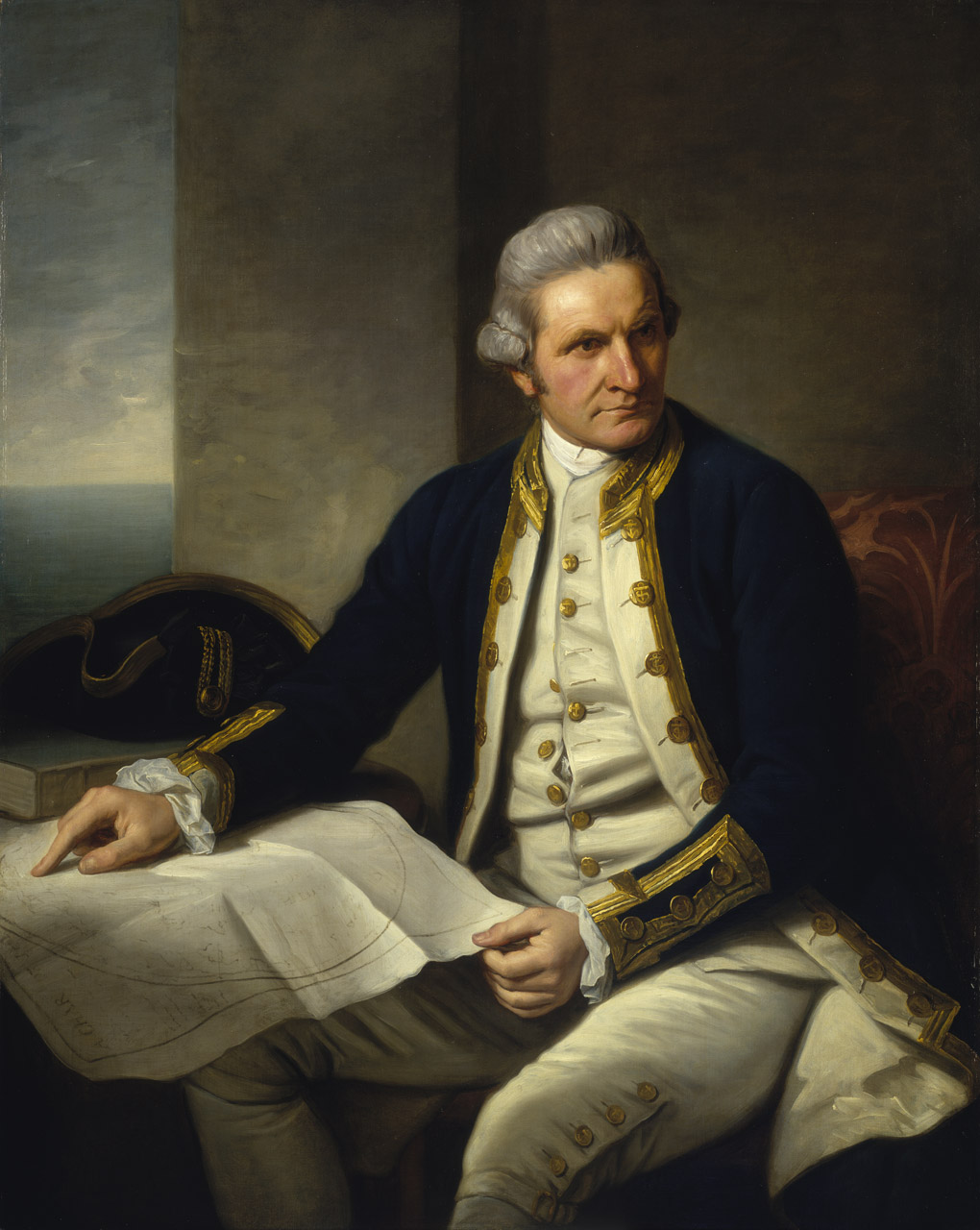
Captain James Cook
Sailing the Globe
It's the anniversary of the day that Captain Cook arrived in England in 1771.
He had successfully led that first voyage to Australia. But, neither Cook nor his botanist Joseph Banks, realized that the quartz reef where they planted the British Flag contained gold. The area would remain untouched by Europeans for almost two more decades.
And, Cook's ship, the Endeavor, had somehow managed to survive the trials of sailing on the Great Barrier Reef and River. Before he sailed for England, Cook worried the Endeavor wouldn't make it around the Cape of Good Hope.
In a fateful decision, Cook had brought the ship to Batavia, a Dutch colony, to fortify his boat. Batavia was a dangerous place. Malaria and dysentery were rampant. As a result of his stop in Batavia, Cook lost a staggering 38 members of his crew. The botanists, Banks, and Solander, managed to survive the stop, although, at one point, they were both gravely ill. Even as they battled back from illness, they still went out to collect specimens.
So, on this day, in 1771, Cook and Banks and Solander make it home to England. Three hundred sixty-five days later, Cook would be setting sail once more, but this time Banks would not be going. Instead, a German, Johann Reinhold Forster and his son Georg—would be the botanists for his next big adventure.
This post was featured onThe Daily Gardener podcast:
helping gardeners find their roots,
one story at a time