Seeds, Specimens, and a Fatal Flaw: The Legacy of Andrea Cesalpino
This botanical history post was featured on The Daily Gardener podcast:
June 6, 1519
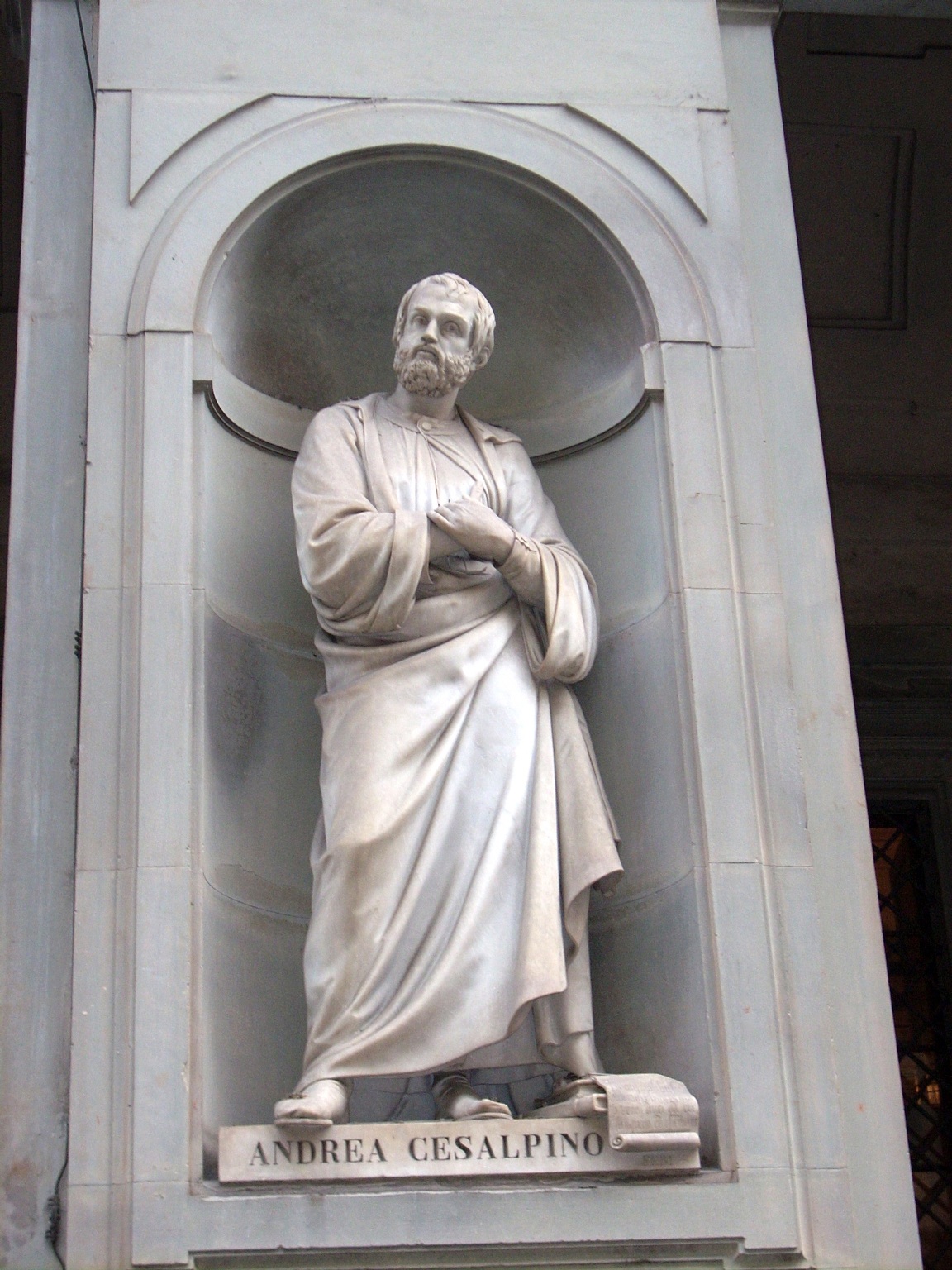
On this day, the botanical world received one of its most illustrious minds—Andrea Cesalpino was born in Arezzo, Italy.
While his contemporaries were fumbling about with alphabetical arrangements or obsessing over medicinal properties, our dear Cesalpino had the audacity to suggest that plants might be classified by their reproductive parts!
Yes, dear gardeners, the man focused on fruits and seeds when everyone else was distracted by leaves and stems—rather forward-thinking, wouldn't you agree?
One cannot help but admire Cesalpino's passion for fieldwork. Unlike certain botanists who preferred the comfort of their libraries, he ventured boldly into nature's realm, collecting specimens with the enthusiasm of a child gathering seashells.
His herbarium—boasting over 700 meticulously preserved plants—was gifted to a fortunate bishop and survives to this day at the University of Florence. I've heard whispers that modern botanists still consult it with reverent hands and magnifying glasses.
In 1583, Cesalpino produced what many consider the first proper textbook of botany. A revolutionary tome, indeed!
However, our brilliant doctor made one catastrophic social blunder—he included no illustrations whatsoever in his magnum opus. "Not necessary," he declared, with what one imagines was a dismissive wave of his hand.
Can you imagine such folly?
In botanical circles, this is akin to hosting a garden party without refreshments!
While his contemporaries splashed their pages with lavish woodcuts and engravings that captured the imagination, Cesalpino relied solely on his prose.
The consequence?
His name languishes in relative obscurity while others—perhaps less innovative but more visually inclined—bloom eternal in botanical memory.
One must wonder if Cesalpino, brilliant as he was in matters of classification, failed to understand a fundamental truth known to every gardener: humans, like honeybees, are drawn first by what they see.
Had he included but a few illustrations, perhaps today we would all be tending our gardens according to the Cesalpino Method rather than the Linnaean System.
Let this be a lesson to us all—in botany, as in life, substance matters tremendously, but one should never underestimate the power of style.