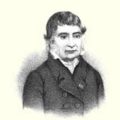
John Lindley: The Orchid Master Who Helped Save Kew Gardens
The Champion of Kew
November 1, 1865
On this day, the British gardener, botanist, and orchid specialist John Lindley died.
For forty-three years, John served as secretary of the Royal Horticultural Society. His long stewardship is why the Lindley Library at the RHS still carries his name.
John’s life with plants began early. His father owned a nursery and an orchard, and John grew up helping with the family business, learning the habits of plants long before he studied them formally.
In 1815, John left his small hometown and went to London. There, he became friends with William Jackson Hooker, who introduced him to Joseph Banks. Joseph hired John to work in his herbarium, drawing him into the center of Britain’s botanical life.
When Joseph died, the future of the Royal Botanic Gardens, Kew was thrown into uncertainty. His death coincided with that of George III, the garden’s patron. Without their support, Kew was suddenly vulnerable. Its management was questioned, its purpose debated, and its glasshouses even eyed for vegetable production.
By the late 1830s, public criticism was growing louder. In 1838, John joined Joseph Paxton and John Wilson in drafting a report urging that Kew be preserved and developed as a national scientific garden. The report was quietly suppressed.
So John pressed the issue further. In 1840, he forced the matter before Parliament, helping to spark public outrage and compel action. John hoped to become director himself, but the position ultimately went to Hooker, whose political backing was stronger. Still, John’s efforts helped secure Kew’s future under government care.
Beyond institutional battles, John’s legacy is deeply botanical. He shortened the unwieldy genus Orchidaceae into the word orchid. When he died, his extensive orchid collection was moved to Kew, where it continued to be studied.
More than two hundred plant species bear his name in some form: lindleyi, lindleyana, lindleyanum, lindleya, lindleyoides.
And one small, often forgotten detail.
John accomplished all of this while blind in one eye.
This post was featured onThe Daily Gardener podcast:
helping gardeners find their roots,
one story at a time
This is not strictly true.
Without the swell of public dissent at the problems at Kew, which were discussed extensively in the cheap periodical gardening press from 1837, the authorities wouldn’t have felt the pressure to do something.
Albeit, Lindley’s report was suppressed for two years.
The public outrage at this lack of action on the part of the government, who were sorting out how Victoria’s households were organised, and the Lord Steward (Lord Surrey, then the Duke of Norfolk) who wanted to convert the botanical glasshouses to grow vegetables, change was not solely due to Lindley.
He wanted the main job at Kew, and was shocked when he didn’t get the role and had confided with Hooker of his aspirations, and Hooker got the job!
Lindley learnt a lot from the process about being more cautious with whom he shared his inner thoughts, how to work with those in authority and the power of the periodical press – to which he added his own influence from 1841 in the Gardeners’ Chronicle.
Lindley was ambitious and covetous of his relationships with the great and good of the horticultural world, but with that attitude came an early death and exhaustion.
Loads of nuance to what happened as you can see!
Hi Francesca,
Thank you so much for taking the time to write such a thoughtful and detailed response. I really appreciate you sharing that nuance, especially around the role of the periodical gardening press and the longer swell of public dissent before 1840. You’re absolutely right that my original phrasing flattened a far more collective and contested story than the historical record deserves.
I’ve since revised the post to reflect that complexity more clearly. Rather than presenting Lindley as a lone savior of Kew, I now place his actions within the wider context you describe: the sustained criticism from the late 1830s, the suppression of the 1838 report, the political distractions of the period, and the competing interests around the glasshouses. Lindley’s intervention in Parliament in February 1840 still appears as a pivotal moment, but no longer as the sole cause of Kew’s survival.
I was especially grateful for your insight into Lindley’s personal ambitions, his disappointment over the directorship, and what he learned about power, caution, and the press. That human dimension adds depth to the story, and it aligns well with the quieter, more reflective direction I’m taking with The Daily Gardener now.
Thank you again for engaging so generously and for helping keep the history honest. I’m glad the updated version better reflects the tangled, collaborative reality behind Kew’s preservation.
Warmly,
Jennifer