The African Adventure Botanical Indiana Jones: Harry Harlan’s North
This botanical history post was featured on The Daily Gardener podcast:
June 28, 1924
On this day, the intrepid botanist Harry V. Harlan regaled the Science Club at Kansas State University with tales of his botanical conquests across the scorching deserts of North Africa.
One can only imagine the wide-eyed students, their attention rapt as Harlan described his 59-day journey by mule caravan through landscapes as foreign to them as the moon!
Dear readers, consider for a moment the audacity required to undertake such a venture. In villages where the English language had never before been heard, our botanical hero ventured forth, armed with nothing but scientific curiosity and an eye for horticultural treasures.
The spoils of his expedition?
A magnificent haul of over 600 plant varieties, carefully collected and transported back to American soil.
What gardener among us would not swoon at the thought of such botanical bounty?
Harlan's exploits extend far beyond this single adventure, of course. The man established an entire school of agriculture in the Philippines! He served the USDA with distinction as Principal Agronomist in charge of barley - a humble grain, perhaps, but one worthy of respect in capable hands.
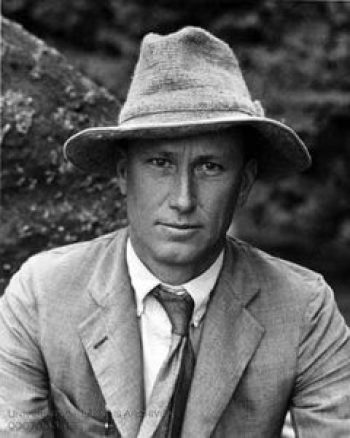
His wanderlust was insatiable, carrying him to the far corners of our globe in search of botanical wonders. The University of Illinois preserves a most revealing portrait of a young and handsome Harlan, captured just before departing for Ethiopia.
One cannot help but note his resemblance to a certain fictional archaeological adventurer!
This striking image later graced the cover of his memoir One Man's Life With Barley (1957) - a title which, I must confess, belies the extraordinary adventures contained within its pages.
One wonders what Harlan would make of our modern garden varieties.
Would he recognize the descendants of his collected specimens?
Would he applaud our conservation efforts or scold our neglect of heirloom varieties?
These questions we cannot answer, but we might honor his legacy by approaching our own gardens with similar curiosity and reverence for botanical diversity.
Let us raise our trowels in salute to Harry V. Harlan, botanical explorer extraordinaire, whose journeys across continents have enriched our gardens in ways we may never fully comprehend!