Granite and Greenery: Berlin Honors Botanist Alexander Braun
This botanical history post was featured on The Daily Gardener podcast:
June 17, 1879
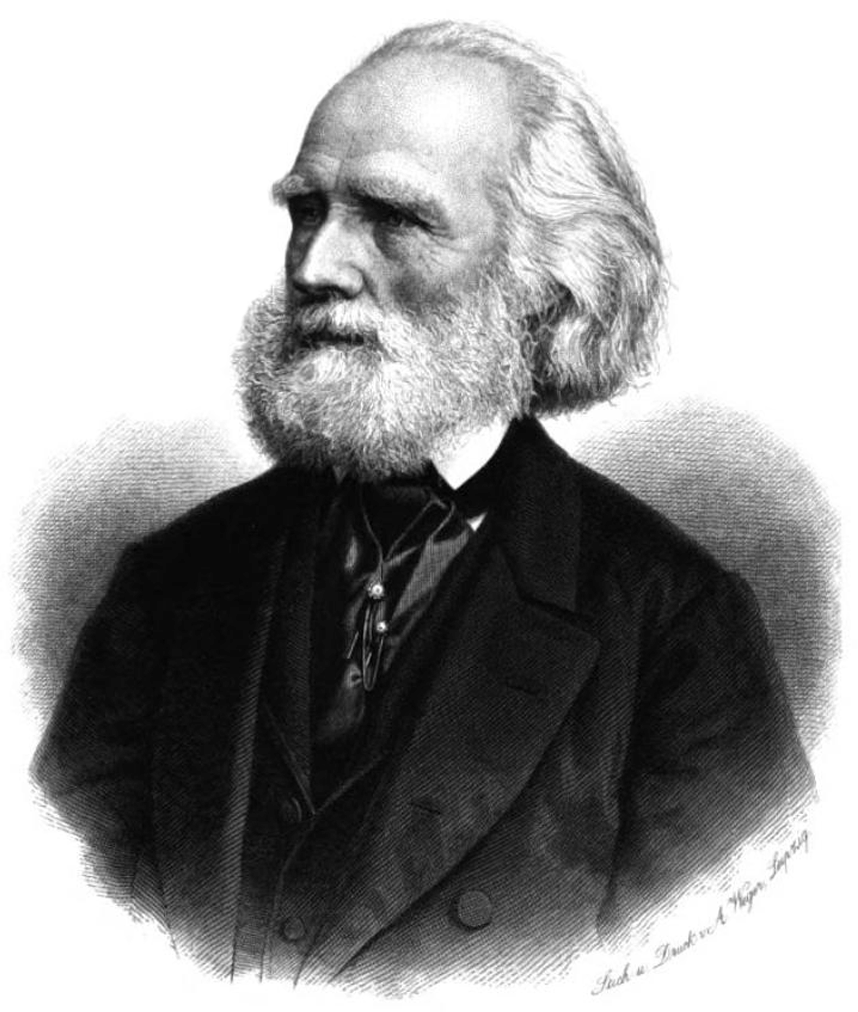
It was on this day that the botanical world paid homage to one of its fallen luminaries, when at the Botanical Gardens of Berlin, a monument to the late eminent botanist Alexander Braun was unveiled with all the ceremony such occasions demand.
One imagines the solemn gathering of Germany's finest scientific minds, their faces appropriately grave as they honored a man who spent his life scrutinizing the secret architecture of plants.
The granite pedestal, executed with Germanic precision by Professor Adler, supported what witnesses assure us was "an excellent likeness" of the great man. (One wonders if Braun himself would have approved of such permanence, he who spent his career documenting the ephemeral and ever-changing forms of plant life.)
For those uninitiated in botanical circles, Braun was no minor figure but a Bavarian botanist of considerable renown. While lesser scientists contented themselves with mere classification, Braun delved deeper into the morphology of plants – that fascinating science where mathematics meets botany in the spirals of a pinecone or the precise arrangement of leaves upon a stem.
His contributions to understanding plant structure revealed patterns where others saw only chaos.
In the garden, dear readers, when you observe the perfect Fibonacci sequence in your sunflower's seed head or the geometric precision of your succulent's growth, you are witnessing the very phenomena that Braun dedicated his life to understanding.
How fitting that his memorial stands in Berlin's Botanical Gardens, where specimens from across the globe create a living testament to the diversity he studied. One suspects that Braun would have preferred this garden setting to any granite likeness – surrounded by the rustling, growing things that constituted his life's passion.
Perhaps on your next garden planning session, spare a thought for Alexander Braun and the countless botanists whose patient observations have informed our understanding of the plant world.
We gardeners stand on the shoulders of such scholarly giants, even as we kneel in the soil with our trowels and pruners.
The monument's unveiling reminds us that while gardens may fade with the seasons, the knowledge gained from their study endures, passed from one generation of plant enthusiasts to the next—a legacy more lasting than granite.

Dear Sir or Madam,
I am preparing a publication about Alexander Braun and would like to include a picture of the bust said to be in the Botanical Garden in Berlin. If possible, please send me any information about this topic, or even a picture or a link to a picture if available. Also, where did you get the information from, which you have written.
I would be very grateful for any support of my studies.
Thank you, in anticipation
Dietrich Kadolsky