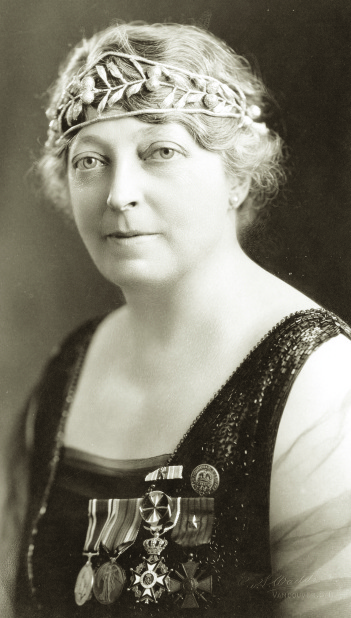
Julia Wilmotte Henshaw
The Note Book
Today is the birthday of the Canadian botanist Julia Wilmotte Henshaw who was born on this day in 1869.
Remembered as one of British Columbia‘s leading botanists, Henshaw studied for a bit with the botanist Charles Schaefer and his wife, Mary Schaefer Warren. The two were surprised when Henshaw published Mountain Flowers of Americain 1906. Rumor had it that the Schaefers may have felt Henshaw had co-opted their work, but another perspective would be that Henshaw was more driven, and she was definitely an experienced author. In either case, the work needed to be published, and by that time, Henshaw had already written a few books, so she was not slow to publish. In any case, she went on to publish two additional volumes on Canadian wildflowers.
Henshaw was a founding member of the Canadian Alpine Club.
Henshaw had a regular column called The Note Book that was featured in the Vancouver Sun newspaper, where she was known as gentle Julia by her fellow journalists.
Her weekly column is a delight to read even today.
In April of 1937, she wrote:
"If one were to tabulate all the proposals put forward as to what is to be done with that monstrosity called a fountain, in the center of Lost Lagoon, I think it would occupy a whole column in the newspaper! Some want it to continue to work as a fountain, illuminated or not; others propose to turn it into a rockery."
The last one she wrote talked about was a continuation of the previous week’s discussion of the destruction of forest areas. Henshaw always wrote with conviction, and in that last column, she aimed to rouse awareness:
"I refer to the practice which has increased with each passing year of shipping enormous quantities of young Douglas firs by the carload to the United States for use as Christmas Trees. Surely this is a matter which should be promptly and peremptorily stopped."
And here’s a lovely excerpt from her post for this day August 8, 1935
"When one stops for an instant in the whirligig of daily life to think of "All things bright and beautiful," three words spring into prominence, namely music, children and gardens, each bringing a separate form of loveliness before our eyes, yet all three correlated in color, fragrance and form."
This post was featured onThe Daily Gardener podcast:
helping gardeners find their roots,
one story at a time