Suffrage in Bloom: The Remarkable Garden Life of Nellie McClung
This botanical history post was featured on The Daily Gardener podcast:
June 17, 1916
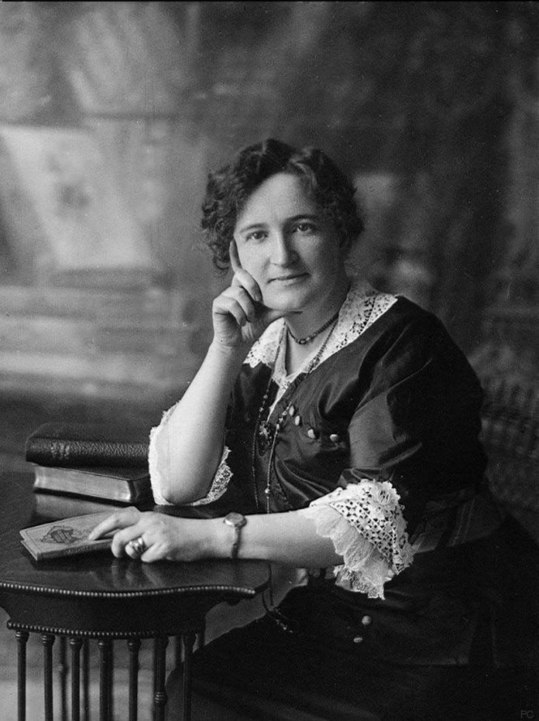
It was on this day that a photograph preserved for posterity captured two titans of women's suffrage—our own Nellie McClung standing shoulder to shoulder with the formidable British firebrand Emmeline Pankhurst.
What a delicious snapshot of determination!
Two women who refused to be decorative fixtures in a man's world, much like those gaudy ornamental cabbages that provide no sustenance but demand attention.
Nellie McClung—that indomitable force of nature—secured for Canadian women the right to cast their ballots, shattering the glass ceiling of politics with the same decisive blow one might use to divide stubborn root systems. A revolutionary act, indeed!
One can now wander through Nellie's home and garden in Calgary, where surely the most fascinating blooms are not the flowers themselves but the radical ideas that once germinated within those walls.
I encourage you, dear gardeners, to make the pilgrimage and breathe the same air that nourished such revolutionary thinking. Perhaps some trace of her courage might take root in your own breast.
While history remembers her crusades for equality, it would be remiss not to acknowledge that authorhood was her daily bread.
And what fed her literary ambitions more than anything else?
Her garden, of course!
Those verdant rows and blooming beds served as both sanctuary and muse—much as our own gardens provide refuge from the ceaseless demands of society.
Her debut literary offering, Sowing Seeds in Danny, aptly named for a woman who understood the power of planting ideas and watching them grow, has drawn comparison to L.M. Montgomery's Anne of Green Gables. Both works flew from booksellers' shelves with remarkable haste throughout Canada, proving that women's voices—when finally permitted to be heard—resonated with thunderous approval.
One can only imagine Nellie in her garden, pen in hand, plotting not just the placement of perennials but the advancement of women's rights. The symmetry is exquisite—as she cultivated her plants with care and attention, so too did she nurture the seeds of change in Canadian society.
For is not political reform much like gardening?
One must prepare the soil, select the proper moment for planting, and then tend vigilantly against the weeds of opposition and indifference.
Perhaps we might all take inspiration from Nellie's dual passions.
As we plan our spring plantings, let us also consider what ideas we might sow in our communities.
What outdated notions might we compost?
What fresh perspectives might we cultivate?
The garden, after all, has always been a place of transformation and possibility.
And when you next find yourself with soil beneath your fingernails and the satisfaction of honest work in your heart, remember Nellie McClung—who understood that both gardens and societies require consistent attention, fierce protection, and occasional radical pruning to reach their full potential.