The Serpent Charmer: Remembering Garden Designer Sir Geoffrey Jellicoe

On this day page marker white background
This botanical history post was featured on The Daily Gardener podcast:

Click here to see the complete show notes for this episode.

July 17, 1996

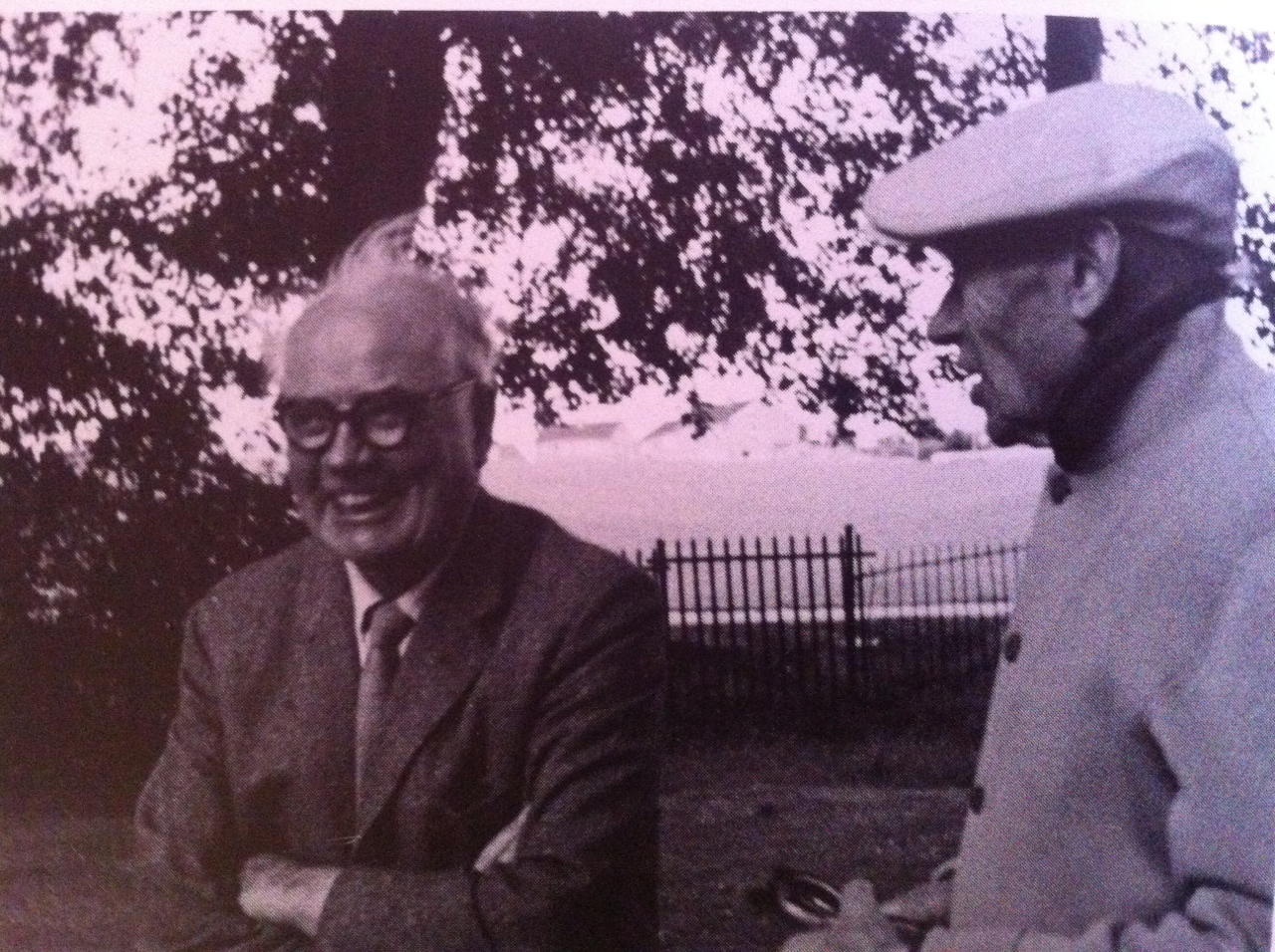
Today marks the passing of that most illustrious garden maestro, Sir Geoffrey Jellicoe, a man who wielded landscape like some wield a pen—with absolute authority and breathtaking vision.

One feels compelled to acknowledge that while death may claim the gardener, it certainly shall never claim his gardens.

Jellicoe, blessed with a multitude of talents that would make lesser mortals green with envy, found his true calling in the arrangement of earth and flora, boldly declaring landscape design as "the mother of all arts."

How fitting that such a maternal metaphor should come from one who birthed over 100 magnificent landscapes across our globe during his prodigious 70-year career! He was, of course, among the venerable founding members of the Landscape Institute—an organization that continues to benefit from his considerable shadow.

Among his creations stands the John F Kennedy memorial site, nestled alongside the Thames in Berkshire—a place where water and stone speak more eloquently of remembrance than any flowery eulogy ever could.

His final ambitious project—one might call it his magnum opus—was to be the Moody Gardens in Galveston, Texas.

Here, Jellicoe envisioned visitors traversing nothing less than the entire history of landscape itself! Imagine walking from the Garden of Eden, through ancient Egyptian paradise gardens, culminating in a design inspired by Thomas Mann's The Magic Mountain.

Such magnificent audacity!

As the Moody Garden website rather plaintively acknowledges:

"It was the culminating work of his design career but has not, as yet, been implemented. We live in hope."

Indeed, we do live in hope, dear readers.

Though one cannot help but wonder if modern sensibilities could possibly execute such a grand vision with the required subtlety.

When pressed about his favorite among his many green children, Jellicoe confessed particular affection for his Hemel Hempstead Water Gardens. Created not merely for beauty's sake—though beauty they certainly possess—but to elevate the everyday existence of townspeople.

How revolutionary!

A garden meant not for aristocratic contemplation but for common pleasure!

The design features an ingenious canal system with dams and charming bridges that escort visitors from mundane parking lots to commerce. Practical, yes, but infused with such artistry that one hardly notices the utilitarian purpose.

Perhaps most revealing is how Jellicoe drew inspiration for this canal from one of Paul Klee's serpentine paintings.

The master himself explained:

"The lake is the head and the canal is the body," wrote Jellicoe in his book Studies in Landscape Design. "The eye is the fountain; the mouth is where the water passes over the weir.

The formal and partly classical flower gardens are like a howdah strapped to its back. In short, the beast is harnessed, docile, and in the service of man."

What exquisite imagery!

A serpent of water, tamed and ornamental, yet still possessing its primordial power beneath the civilized veneer.

Is this not the very essence of all great gardens?

Nature, that most willful of creatures, momentarily yielding to human desire while maintaining its essential character.

As we gardeners plunge our hands into soil today, let us remember Jellicoe's greatest lesson: that a garden is never merely plants arranged pleasingly, but rather a conversation between humanity and the natural world—a dialogue that continues long after its creator has departed.

Sir Geoffrey Jellicoe

Leave a Comment